The banner is to inform visitors of an important message

.webp)
What You’ll Learn: How to evaluate risk vs reward on drivable par 4s, When going for the green makes sense, Why laying up isn’t always the safer play, How distance and landing areas affect strategy, How smart decisions help high handicaps avoid big numbers
0:00
Coach: Back with Payton—this is “Call Your Shot.” We’re going to talk more high handicap strategy.
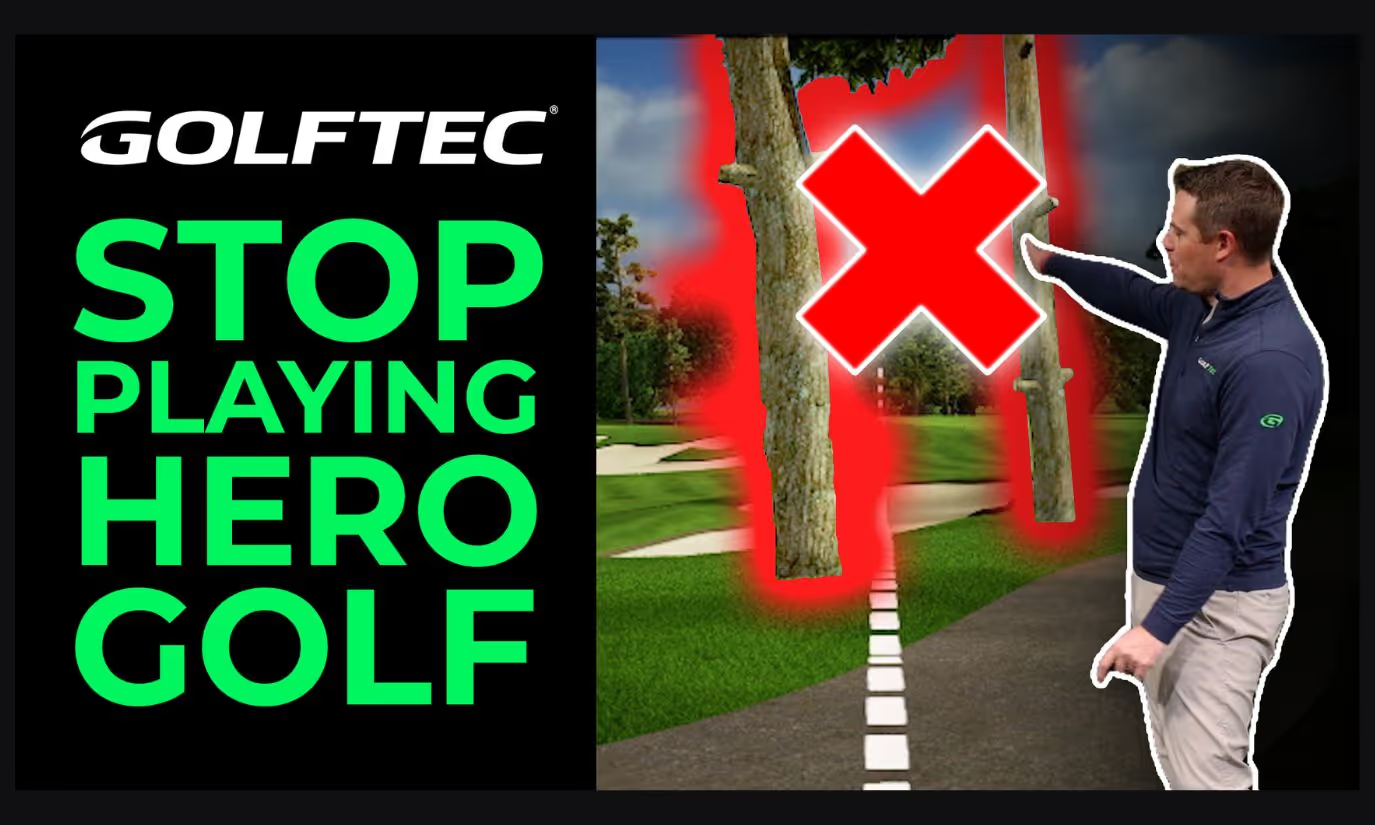
This is a common situation: a drivable par 4. Should you go for the green or lay up? We’ll talk through what Payton would do and whether it’s a good decision.
0:22
Coach: You’ve seen this hole—we just did a flyover. Everyone at home saw it too.
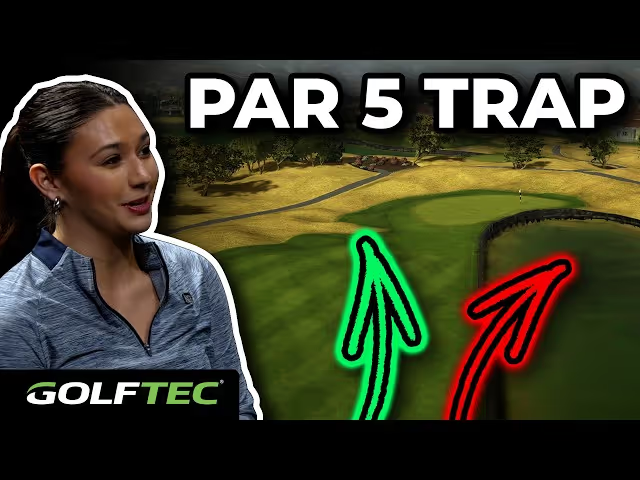
We’ve got about 230 yards from the tee. There’s a bunker up the left, some mounds and hills, and you’ve basically got to get it all the way to the green if you go for it.
If you’re playing this hole, what are you doing?
0:42
Payton: I’m probably going to go for it.
Coach: Why?
0:45
Payton: If I hit a really good driver, I could get there. It’s about 228. I’d aim a little right to avoid the bunker, but I’d try to hit my driver as hard as I can and go for it.
0:59
Coach: That’s fair. The lesson here is about weighing a couple things.
First, what’s the trouble around the green? In this case, it’s really just the bunker—which isn’t a big deal unless you struggle with sand.
If there were water, out of bounds, or major hazards, then you’d need to seriously consider whether the risk is worth it.
1:39
Coach: On this hole, there’s not much trouble near the green. And honestly, laying up isn’t that easy either—the fairway gets narrower the farther you go.
So trying to hit an iron to 180–200 yards actually makes it harder to hit the fairway.
1:54
Coach: A lot of golfers think, “I’ll just lay up and be safe,” but sometimes that “safe” play is actually more difficult.
In this case, driver is totally fine. You should go for it and try to get as close to the green as possible.
2:09
Coach: In general, the closer you are to the hole, the fewer strokes it takes to finish.
As long as there’s no major trouble, distance is your friend.
2:17
Coach: Let’s see it—rip one out there and try to get it on the green.
2:34
Coach: That’s a good example. You didn’t hit that perfectly—it was a mishit—but there’s not much trouble, and you still ended up in a good spot.
That’s why we’re having this conversation. Even imperfect shots can work out if the strategy is sound.
2:53
Coach: Let’s give it one more try—see if you can knock one on the green.
But this is a great example of why you need to think before hitting your tee shot: understand the risk, understand the reward, and plan accordingly.
3:15
Payton: Right where the other one was. I guess I can’t hit my driver that far.
3:20
Coach: That’s okay. Normally this hole plays downwind—I forgot to turn the wind on, so that’s on me.
But either way, those are two solid shots in the fairway. Even if they weren’t perfect, you’ve put yourself in a good position.
3:32
Coach: From there, you can get it on the green, maybe have a birdie look. Worst case, you’re looking at par or bogey—but you’ve taken the big numbers out of play.
That’s the whole point.
Ready to elevate your game? Book a lesson or fitting at your nearest GOLFTEC location today!


Enter your info to have one of our expert coaches reach out about lessons, club fittings or practice!



.avif)
.avif)
.avif)
.avif)
.avif)
.avif)
.avif)
.avif)
.avif)