.webp)
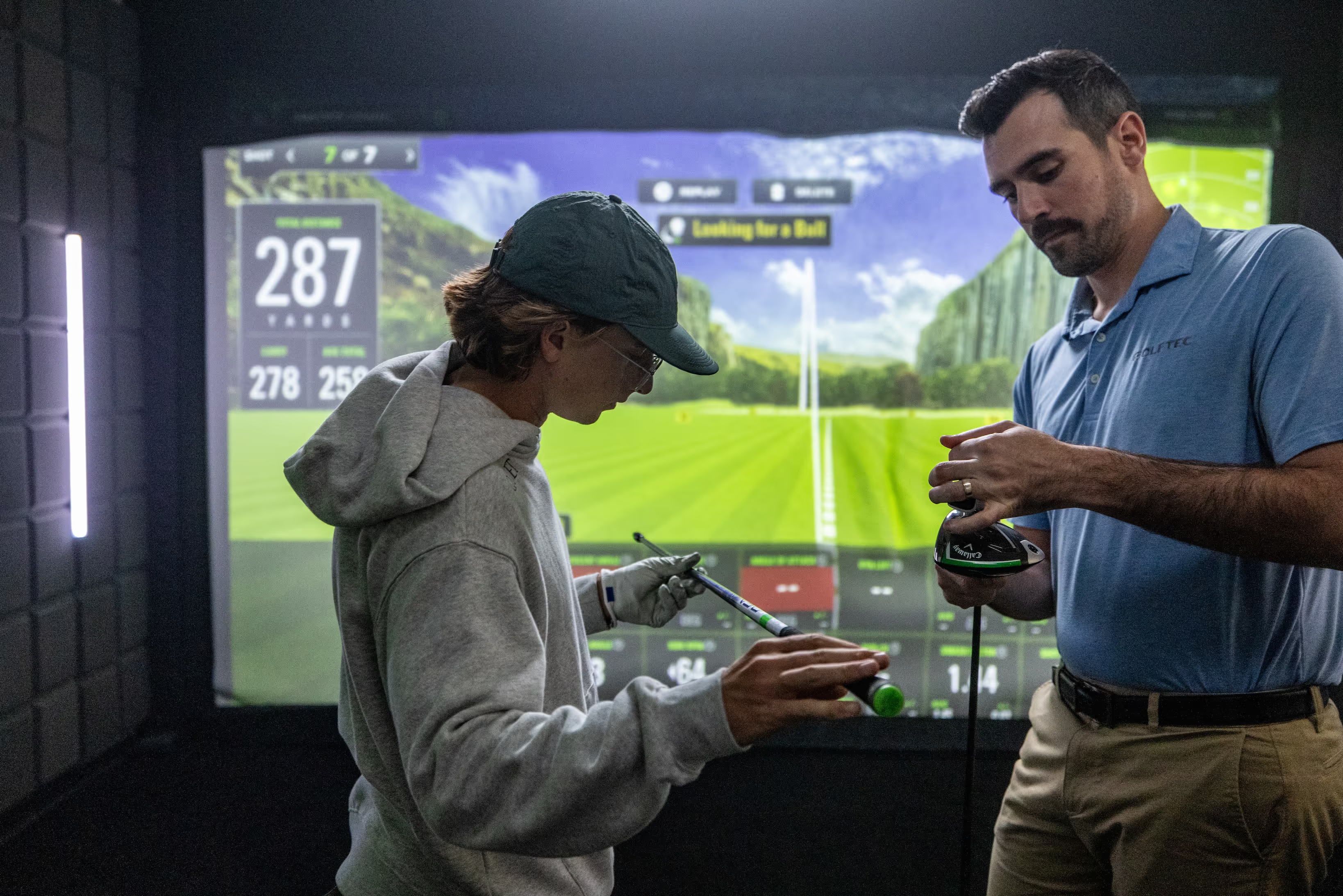
Table of Contents:
You just hit another grounder, and you do the same thing many players do when they get frustrated. You scroll through a dozen tips on YouTube and try a couple that sound promising. But on the next shot, you skull it yet again.
Soud familiar?
The YouTube Trap: Why Free Advice Can Have a Hidden Cost
To be clear, you can find lots good golf instruction content on YouTube. GOLFTEC has an extensive library of it, and the game's most famous coaches are always posting tips, drills, and explanations.
The problem isn't the content. It's the curation. YouTube works on a broadcast model, where a "good" tip is measured by how many people watch the video. For that reason, the instruction is usually built around the most common version of a swing fault, not your specific version of it. You nd your friend might both have a slice, but the drill that fixes your open club face and one that addresses his or her over-the-top move are probably different.
According to the National Golf Founation, the average player's handicap has barely moved in three decades despite an explosion of available instruction content — including the rise of YouTube, Instagram Reels, and short-form swing tips. Golfers today have more free advice at their fingertips than any generation in history, and they're not getting better at the rate you'd expect. Yet the average GOLFTEC student improves by seven shots.
That's not a coincidence. (Learn more on how we've helped BEGINNER, WOMEN, seasoned golfers improve their game)
What a Guided Program Actually Does Differently
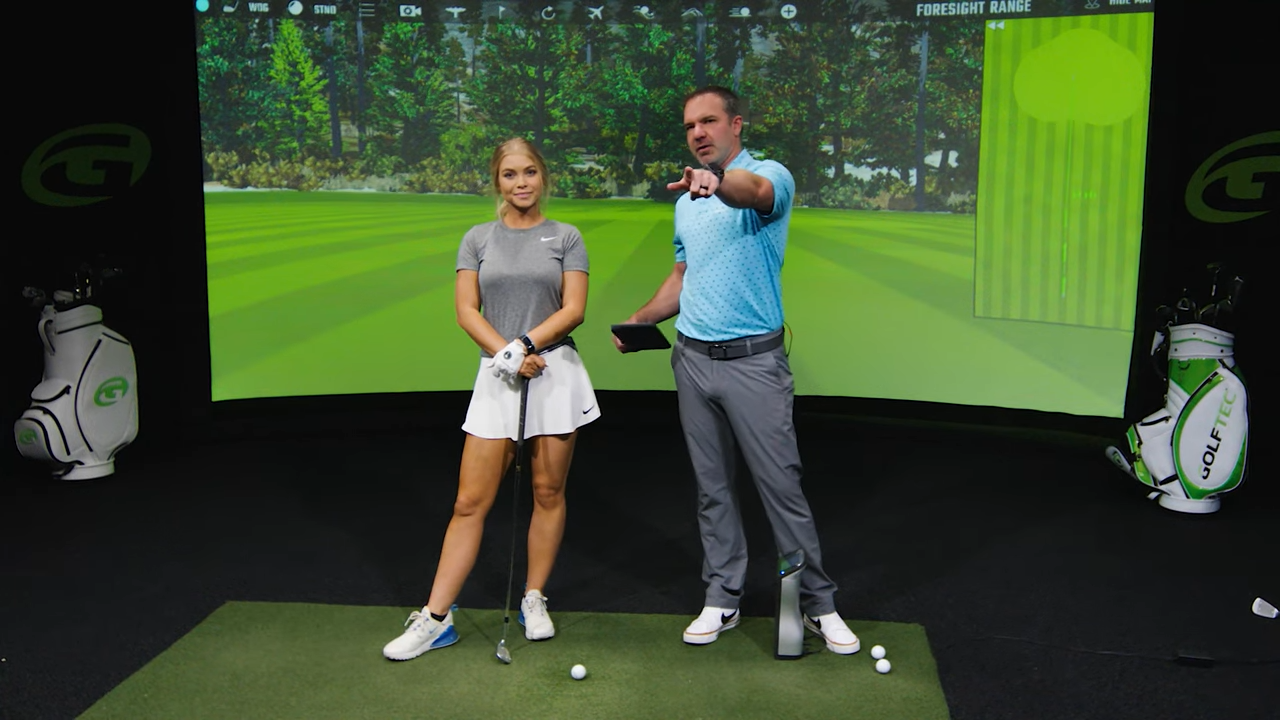
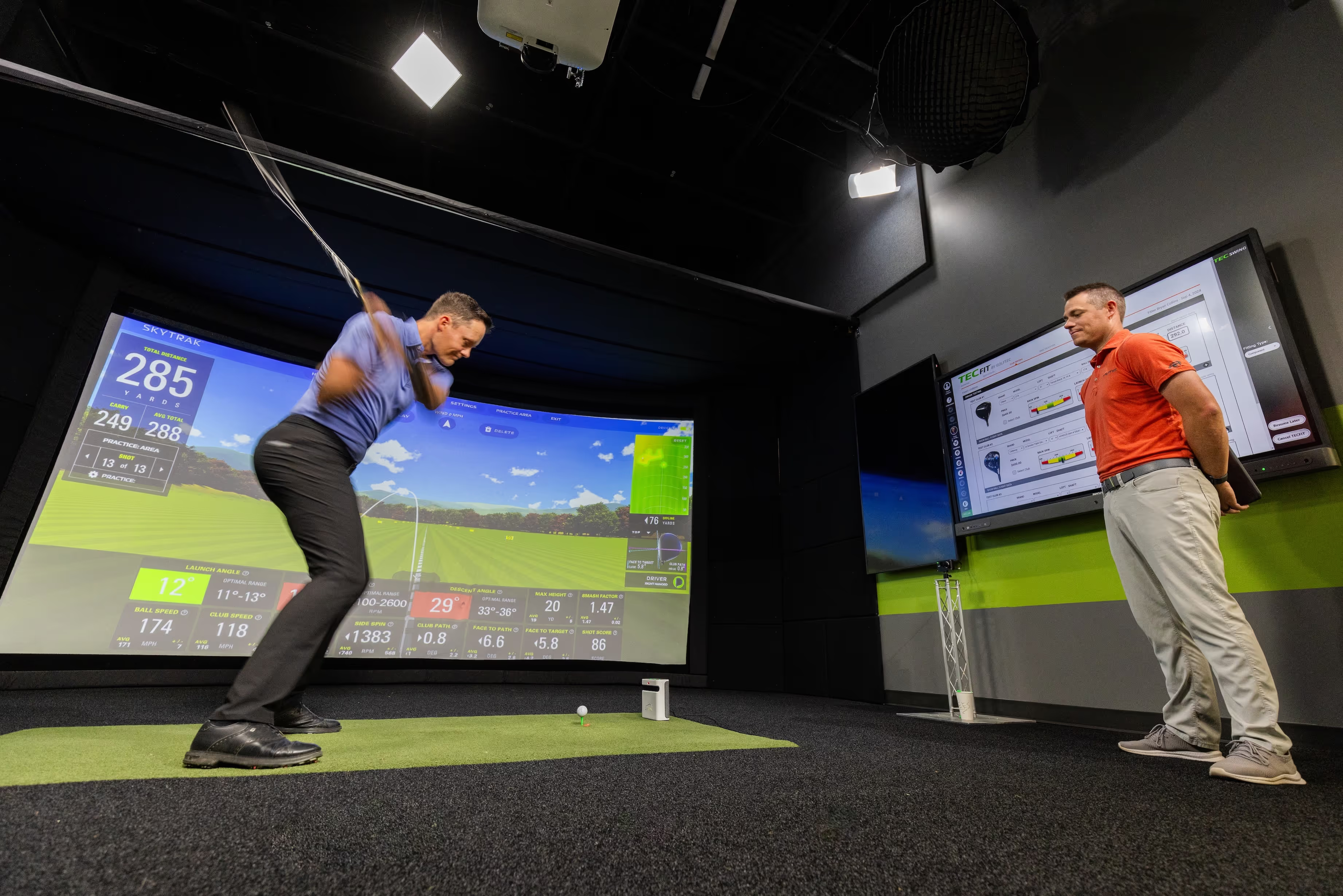
The best guided programs begin with real data. GOLFTEC coaches use a proprietary motion capture technology to evaluate a player's swing and build a comprehensive improvement plan that is based on science, not a guess.
Watch what that looks like in practice:
What you see in that video is the core difference between a YouTube tip and a guided program. The coach isn't guessing. He's looking at actual numbers — the student's shoulder turn, her hand path, her club face — and identifying the one thing that will produce the most improvement the fastest. That's not possible with a broadcast model. It requires technology, a trained eye, and a real conversation.
Most golfers who struggle have multiple swing faults, and those faults are related to each other. Fix them in the wrong order, and you can actually make things worse. A guided program maps that sequence intentionally. The dominant swing issue is addressed first, and then the rest of the swing is built around that foundation. This is how motor learning actually works.
A 2022 study published in the International Journal of Sports Science & Coaching found that golfers who received structured, feedback-based instruction improved handicap indexes at more than three times the rate of golfers who practiced independently — even when total practice hours were held constant. Three times.
Watch what that progression looks like across lessons:
Notice what's happening there. The coach isn't introducing something new because the previous tip didn't work — he's introducing something new because it did. The backswing change created the foundation for the next layer of improvement. That's a program. That's not a playlist.
"But I Learn Better Watching Videos"
Fair enough. GOLFTEC coaches actively encourage students to watch instructional content between lessons. The GOLFTEC app gives you access to video drills specifically matched to your improvement plan, so the watching you're doing is connected to what you're actually working on.
The difference is context. A drill your coach assigns you — knowing your data, your tendencies, your practice schedule — lands completely differently than a random tip you find on a Tuesday night rabbit hole. One is a piece of a coherent plan. The other is noise, however well-produced.
Consider a Tour player who works with a nutritionist and a financial advisor. You can find the ingredients and macros for pretty much any food you eat, and there's a raft of free financial advice out here. The application of the right information, in the right sequence, for your specific situation — that's what creates value.
Where to Start
If you've been running the YouTube loop — watch, try, fail, repeat — and you're ready to actually see your numbers and build a real plan, the place to start is a GOLFTEC Swing Evaluation. It takes about an hour, gives you a complete picture of your swing data, and maps out the priority order your improvement plan will follow.
You can also get a sense of what the process looks like before you book by reading about how GOLFTEC coaches apply this same data-driven approach to analyzing tour professionals — the same technology, the same methodology, just applied at a different skill level.
The free tips will still be there when you get back. But you'll watch them differently — with a framework for what actually applies to your game, and what doesn't.

Play the best golf of your life. GOLFTEC Coaches use cutting-edge tech and proven methods to level up your game fast.
Book a Lesson
Play Better!
Book a Fitting
Play Better!