The banner is to inform visitors of an important message

.webp)
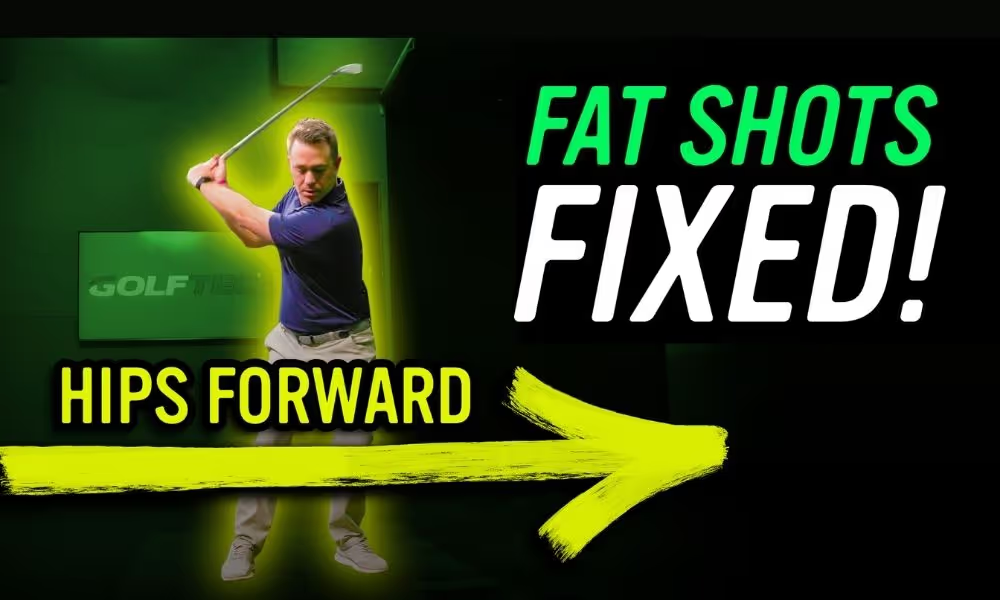
In this episode of Swing Autopsy, we analyze a golfer's downswing to uncover the key issues affecting distance and contact, revealing how hip and shoulder movements can limit performance.
00:00:00.000 So, I've stumbled across another student
00:00:02.520 that is hitting the ball too short, too
00:00:04.520 far to the right, and just struggling
00:00:06.120 with overall consistency. Let's check
00:00:08.360 out what we found.
00:00:20.305 >> [music]
00:00:26.855 [music]
00:00:32.095 [music]
00:00:37.840 >> So, my student Beth here is a former
00:00:41.920 college golfer and came to me with
00:00:44.280 struggles of inconsistency, hitting the
00:00:47.200 ball a little too short, trying to dial
00:00:49.760 in distances with the new clubs, and not
00:00:51.800 really sure how far the club's actually
00:00:53.680 going to go. So, we took a look at her
00:00:56.000 swing, and she has a fantastic backswing
00:00:58.920 through some of the stuff we've worked
00:01:00.000 on. Um,
00:01:00.915 >> [music]
00:01:00.920 >> but now it's time for us to work on her
00:01:02.280 transition. So, really talking about how
00:01:04.360 she moves from
00:01:05.500 >> [music]
00:01:05.680 >> P4 to P5, or when that lead arm is
00:01:08.720 parallel to the ground. Um, she tends to
00:01:11.200 get a little too steep [music] and get
00:01:12.840 that hand path more outward than toward
00:01:14.640 average. So, when that happens, a steep
00:01:17.040 attack angle paired with not enough
00:01:19.040 lateral movement or hip sway towards the
00:01:20.800 target is going to be really hard for
00:01:22.680 her to group together the same kind of
00:01:24.360 shot [music] time and time again.
00:01:27.000 Now, looking at this swing with just the
00:01:29.120 naked eye, we can make [music] a lot of
00:01:30.840 assumptions and connect some dots, but
00:01:33.440 to really, really help this golfer out,
00:01:35.400 I think we're going to have to check out
00:01:36.560 OptiMotion, dive into some of these
00:01:38.720 nitty-gritty details, and figure out how
00:01:40.280 we can best help [music] Beth.
00:01:46.766 >> [music]
00:01:50.400 >> So, figured out a few things looking at
00:01:52.760 Beth's swing, but we're going to take a
00:01:54.000 deeper dive and do what we do well, and
00:01:56.240 figure out how we can help Beth play her
00:01:57.840 best golf. So, [music]
00:01:59.120 over here on the left I have Anne Van
00:02:00.720 Dam, one of our tour pros. She's going
00:02:02.720 to start with her shoulder sway and her
00:02:05.080 hip [music] sway pretty close to zero.
00:02:07.080 So, you'll notice her shoulder sway is
00:02:08.360 at 2 in towards target. Her hip sway is
00:02:10.280 pretty close to zero, but we're going to
00:02:11.720 call it one. Now, the pattern we're
00:02:13.720 going to talk about is very important
00:02:15.040 for what we're going to talk about with
00:02:16.200 Beth. So, when we look at Anne, you'll
00:02:18.600 see from four
00:02:20.400 to P5 or where this lead arm is parallel
00:02:22.760 to the ground, she's moved her hips and
00:02:25.320 her shoulders about 2 in closer to that
00:02:27.959 target. So, [music] in that tiny span of
00:02:30.280 four to five, she's moved a good amount
00:02:32.440 towards that target. [music] Now, from
00:02:34.080 this point forward is where you're going
00:02:35.640 to see a big difference between Anne and
00:02:37.800 Beth and how they go about their sway
00:02:39.440 pattern. [music] So, if I come over here
00:02:40.880 to Beth, we'll take her down to P5. And
00:02:43.320 I told you Beth's been doing awesome
00:02:44.640 with her lessons that we've had. She
00:02:46.240 used [music] to play college golf, so no
00:02:47.520 surprise that her hip sway is very good
00:02:49.440 at the top of her swing. Again, she's
00:02:51.360 pretty close to zero. Shoulders are
00:02:53.160 about 2 in towards target. Now, at the
00:02:55.440 start of this downswing, [music]
00:02:57.120 you'll see Beth will move
00:03:01.959 roughly 2 in with the hips and roughly 2
00:03:04.880 in with the shoulder. Again, you'll see
00:03:06.760 on both tracers on both Anne and Beth
00:03:09.160 that that line or that circle on their
00:03:11.120 hips and shoulders, [music] that pink
00:03:12.760 line moves towards our target. Now, from
00:03:15.360 this point forward is where we start to
00:03:16.920 see a little bit of difference. Now, if
00:03:18.519 I come back over here on to Anne,
00:03:20.432 >> [music]
00:03:20.800 >> you'll see from position five here that
00:03:23.400 her hip sway keeps increasing or moving
00:03:25.800 towards that target in a pretty quick
00:03:27.360 manner. Her shoulder sway, however,
00:03:30.200 actually starts to go backwards or move
00:03:32.200 away from target. Now, as we start to do
00:03:34.720 that, you'll start to see a change in
00:03:36.519 her spine angle and how her shoulders
00:03:38.360 are further away from target than her
00:03:39.880 hips. This is going to be really
00:03:41.360 important for Anne controlling her low
00:03:42.880 point hitting in front of the ball, but
00:03:44.480 also creating a ton of power. Now, when
00:03:47.280 we come over here to Beth, you'll see,
00:03:49.252 [music] again, nothing wrong inherently
00:03:51.280 with what we see here, but as we start
00:03:53.440 to move down into the swing,
00:03:55.520 you'll see that her hip sway doesn't
00:03:57.680 quite move as quick [music]
00:03:59.760 as say her shoulder sway does. And now
00:04:02.960 we're starting to see that these are
00:04:04.120 starting to become pretty level.
00:04:06.360 Again, big [music] difference between
00:04:07.880 the amount of shoulder sway and hip sway
00:04:09.400 on Anne,
00:04:10.520 not so much on Beth over here.
00:04:12.720 So now that we've kind of discovered
00:04:14.360 what's happening in Beth's swing, now we
00:04:16.238 can start to try and help her and get
00:04:17.720 this thing [music] fixed. So again, what
00:04:19.279 we're going to try and accomplish with
00:04:20.519 Beth not so much of a bending pattern or
00:04:22.919 anything in her follow-through, but just
00:04:24.560 how much she's swinging with her hips
00:04:26.320 versus how [music] much she's swinging
00:04:27.240 with her shoulders. So my goal is to try
00:04:29.400 and create a bigger difference between
00:04:31.120 her hips and [music] shoulders. Again,
00:04:33.120 you'll see she's almost the exact same
00:04:34.720 spot resulting in a very upright spine
00:04:36.960 angle
00:04:37.919 versus Anne having more of a spine angle
00:04:40.160 that's away from [music] target.
00:04:45.583 >> [music]
00:04:47.960 >> All right, Beth. So we're going to
00:04:49.360 continue walk uh walking you through
00:04:51.080 your hip sway pattern.
00:04:52.280 >> Okay.
00:04:52.640 >> Today, it's not just moving towards
00:04:54.960 target though. We got to start learning
00:04:56.520 how to separate your shoulder sway from
00:04:58.280 your hip sway.
00:04:58.960 >> Okay.
00:04:59.360 >> So what I mean by that is if this pool
00:05:01.200 noodle was like my spine,
00:05:03.360 as you make a golf swing, I can't have
00:05:05.600 you at impact with your spine towards
00:05:07.840 target or even like straight up and
00:05:09.360 down.
00:05:09.818 >> [music]
00:05:10.000 >> It's going to be really hard for you to
00:05:11.080 use your arms how you want to, hit the
00:05:13.080 ground in a consistent spot, and then
00:05:14.760 distance is going to be hard.
00:05:15.880 >> Okay.
00:05:16.240 >> So when I talk about having a difference
00:05:18.280 between shoulder sway and hip sway,
00:05:19.643 >> [music]
00:05:19.919 >> I'm really talking about having my hip
00:05:21.440 sway be more towards target than what my
00:05:23.680 shoulder sway is.
00:05:24.760 >> Okay. [music]
00:05:25.160 >> When I do that, my head and chest are
00:05:26.840 behind my shoulders if you will, and
00:05:28.960 then my spine has more of this angle.
00:05:30.778 >> [music]
00:05:30.880 >> Okay.
00:05:31.280 >> So what we're going to do is just a
00:05:32.680 continuation of what we've been working
00:05:34.080 on. I'm going to hold this noodle by
00:05:35.680 your lead ear.
00:05:36.680 >> Okay.
00:05:37.200 >> Now when you take a downswing, your goal
00:05:39.680 is to move your hips as far towards my
00:05:42.560 projector screen as you can without
00:05:44.533 [music] touching the noodle with your
00:05:45.760 hip.
00:05:46.160 >> Okay.
00:05:46.600 >> So that's going to be from the very top
00:05:48.000 of the swing. And what we're going to do
00:05:49.680 is we'll just start with no ball.
00:05:51.240 >> Okay.
00:05:51.920 >> I'm going to have you set up in your
00:05:52.800 normal golf swing.
00:05:54.880 I want you to take a slow backswing,
00:05:57.720 pause at the top, and then you're going
00:05:59.200 to make a really slow downswing doing
00:06:01.200 exactly what we just talked about.
00:06:02.960 >> Okay.
00:06:08.080 >> Good.
00:06:08.280 >> Ooh, okay.
00:06:09.560 Okay, I definitely hit it.
00:06:10.734 >> [laughter]
00:06:11.000 >> And you should notice, and if you hit it
00:06:12.720 at the very end, totally cool. I'm just
00:06:14.280 concerned at the top of your swing as
00:06:15.960 you go down and at impact, we should be
00:06:18.200 well away from that.
00:06:19.120 >> Okay.
00:06:19.800 >> Now, with this, just remember
00:06:22.040 I don't want you cheating by moving your
00:06:23.600 hips away from target
00:06:25.200 >> Okay.
00:06:25.520 >> and leave your head away.
00:06:26.480 >> Yeah.
00:06:26.919 >> I still want like if you were in a belt
00:06:28.560 buckle like I am, I still want you
00:06:30.360 getting that in front of the noodle or
00:06:32.400 over your left foot.
00:06:33.760 >> Okay.
00:06:34.240 >> The head is just what I want to avoid
00:06:35.800 the noodle.
00:06:36.280 >> Got it.
00:06:36.720 >> So, again, just like you did, nice and
00:06:38.480 slow on the downswing so you can get a
00:06:40.120 feel for it.
00:06:46.040 Good.
00:06:46.720 >> Nice.
00:06:47.800 >> I want you to roll a ball out there.
00:06:51.000 You can do the same thing, so we're
00:06:51.960 going to do a full swing, but I want you
00:06:53.560 to imagine hitting this full swing
00:06:55.200 7-iron like 30 yards at most. So,
00:06:58.560 your goal
00:06:59.720 move your hips as far towards the target
00:07:01.640 as you can at the start of your
00:07:02.680 downswing, and just try and avoid the
00:07:04.760 noodle with your head.
00:07:05.640 >> Okay.
00:07:05.960 >> Okay.
00:07:15.080 Beth, how did that first one feel?
00:07:16.600 >> A lot better.
00:07:17.544 >> [laughter]
00:07:17.880 >> Yeah.
00:07:19.040 >> Now, there's a few things that we'll
00:07:20.480 kind of pick apart on that one that you
00:07:22.000 just hit.
00:07:26.720 Now, first and foremost is like your
00:07:28.520 smash factor.
00:07:29.760 So, normally your smash factor was like
00:07:31.440 1.08.
00:07:32.960 >> Mhm.
00:07:33.360 >> That first swing, you're already at
00:07:34.520 1.13. So, all that's saying is you're
00:07:36.600 getting more ball speed out of the club
00:07:38.360 head speed that you're delivering. So,
00:07:40.080 more efficiency, right? A little less
00:07:41.680 effort for a little bit more pop.
00:07:43.720 So, I don't know if in like your college
00:07:45.240 days or working on your swing before
00:07:46.480 you've ever heard someone say something
00:07:47.675 [music] like the backwards K or or C,
00:07:51.000 but a lot of people will just use that
00:07:52.720 slang to refer to the shape or just the
00:07:54.680 posture of a player in their
00:07:55.640 follow-through.
00:07:56.240 >> Yeah.
00:07:56.640 >> So, again, you'll notice this like nice
00:07:58.400 kind of U shape, if you will. But,
00:08:00.440 again, all that's happening is her
00:08:01.800 shoulders and head are further away from
00:08:04.000 target than her hips are.
00:08:05.320 >> Got it.
00:08:05.600 >> So, over here, you'll see on a lot of
00:08:07.800 the swings that you'll take prior to
00:08:09.360 this lesson,
00:08:10.080 >> Mhm.
00:08:10.400 >> your back and everything is kind of just
00:08:12.240 straight up and down, all in a straight
00:08:14.040 vertical line. So, you're starting to
00:08:15.919 see how your shoulders are starting to
00:08:17.480 hang back a little further than those
00:08:18.880 hips.
00:08:19.240 >> Yeah.
00:08:19.600 >> And that was just on the first swing
00:08:20.520 now. So, [music] really good first rep.
00:08:22.640 We're just going to keep taking swings
00:08:23.720 like that, and then we'll keep moving
00:08:25.280 forward.
00:08:25.680 >> Love it.
00:08:27.919 >> Now, same thing, Beth.
00:08:29.320 >> Okay.
00:08:30.000 >> Really focus on moving those hips
00:08:32.000 towards the target, but not your head
00:08:34.360 into my head.
00:08:35.280 >> Okay.
00:08:42.679 >> Probably didn't feel great.
00:08:44.760 But, that was looking pretty good on the
00:08:46.320 camera side.
00:08:49.120 >> And for you,
00:08:50.880 what do you know, I'm going to quiz you
00:08:52.600 and put you on the spot. Do you know
00:08:53.600 what your path normally is when you take
00:08:55.680 swings? [music]
00:08:56.640 >> Out to in.
00:08:57.600 >> Yes. Do you know like the number, like
00:08:59.480 ballpark?
00:09:01.080 >> No.
00:09:01.800 >> It's usually like eight to nine.
00:09:04.400 >> Okay. Yeah.
00:09:05.040 >> Every once in a while, you can throw a
00:09:06.360 double digit one out, especially in our
00:09:07.680 first couple lessons.
00:09:09.520 What is different about that last path,
00:09:11.040 though?
00:09:11.400 >> It was inside.
00:09:12.560 >> Yes.
00:09:13.080 >> So, we like to see that.
00:09:14.040 >> That's why you hit it really junky and
00:09:15.480 why it kind of flew a little different
00:09:16.640 than the other ones, but you're actually
00:09:18.080 starting to swing from the inside, which
00:09:19.760 is a huge indicator that you're doing
00:09:21.520 exactly what I want you to do with your
00:09:22.960 swing, Beth.
00:09:23.520 >> Cool.
00:09:24.160 >> Good swing on that one. That was
00:09:25.080 awesome.
00:09:29.856 >> [music]
00:09:33.680 >> All righty, Beth. So, took a couple rips
00:09:35.760 out there. Got some good changes to
00:09:37.560 happen really early on. We're going to
00:09:39.400 just talk about and make sure you
00:09:40.360 understand exactly what you're doing
00:09:41.720 good. So, over here before, again, I was
00:09:44.680 talking about how your shoulder sway and
00:09:46.120 hip sway are very similar to each other.
00:09:48.400 So, when you have those the same amount
00:09:50.080 towards target, you don't have a
00:09:51.880 difference in your spine angle, which
00:09:53.160 means [music] arms are hard to use, low
00:09:55.040 point's hard to use, your distance is
00:09:57.440 going to suffer. Now, over here on the
00:09:59.320 right, not only did you sway more, which
00:10:01.560 is something that you and I have been
00:10:02.480 actively working on, but you'll notice a
00:10:04.320 big difference in your shoulder sway not
00:10:06.320 even being 2 in towards target. This
00:10:08.640 one's over 2 in target.
00:10:10.080 >> Yeah.
00:10:10.440 >> So, now we have a definite difference
00:10:12.480 between our hip sway and our shoulder
00:10:13.960 sway, whereas these ones are very
00:10:15.680 similar.
00:10:16.200 >> Mhm.
00:10:16.800 >> Again, you look at your spine and you'll
00:10:18.240 see how now it's starting to tilt
00:10:19.760 backwards or away from target, but
00:10:22.000 you'll see that line, [music] that pink
00:10:23.640 line on your hips, how before you'd
00:10:25.280 start your swing and it would move
00:10:26.440 towards target and then go straight up.
00:10:28.200 >> Up. Yeah.
00:10:28.840 >> For you, that's not very powerful. It's
00:10:30.200 very hard to control your low.
00:10:31.600 >> Mhm.
00:10:32.080 >> Over here, you'll see a much more kind
00:10:33.840 of linear pattern. That line is now just
00:10:36.120 moving towards target. [music] Make no
00:10:37.920 mistake, it does need to get further
00:10:39.720 away from the ground at a certain point,
00:10:41.360 but for you, that's much later.
00:10:43.080 >> Later in the swing. Got it.
00:10:44.360 >> So, very, very good change there on
00:10:46.000 that, Beth.
00:10:47.200 Um, we're just going to keep cooking
00:10:48.320 along on that.
00:10:49.000 >> Love it.
00:10:51.839 >> Fat shots, top shots, getting out drove
00:10:54.720 by your buddies, or just not enjoying
00:10:56.240 the game anymore. Whatever it may be, go
00:10:58.520 get your swing an autopsy and schedule a
00:11:00.920 game evaluation with a GolfTec coach
00:11:02.560 near you.
Ready to elevate your game? Book a lesson or fitting at your nearest GOLFTEC location today!


Enter your info to have one of our expert coaches reach out about lessons, club fittings or practice!
.avif)
.avif)
.avif)
.avif)
.avif)
.avif)
.avif)
.avif)
.avif)
.avif)
.avif)